This post is also available in: Deutsch

Social media has changed the way businesses communicate. Today, every company, creator, customer, employee, influencer, artist, chef, activist and private person can publish something every day. Everyone has become a voice, and everyone has become a small broadcaster.

That sounds powerful, but it also created a problem. Business messages now compete in a feed full of selfies, food photos, opinions, arguments, memes, holiday videos, political posts and endless personal updates. A company may have a strong offer, a good event or an important promotion, but in the middle of that noise, the message can disappear within minutes.

The Genesis Strategy was developed to solve exactly this problem. Everything starts on your website, social media distributes the message, and every click leads back to your website. Your website is the only digital asset you truly control.

Social media platforms are useful, but they are not your home. They are rented space. The rules can change, your reach can drop, your account can be restricted, and your content can disappear in the feed.

When you publish first on your website and then share teasers across social media, every campaign builds value for your own digital foundation. You create traffic, strengthen brand awareness, improve visibility, capture leads and give visitors more than one reason to stay connected.

That is the core of the Genesis Strategy: Website first. Social second. Website again.

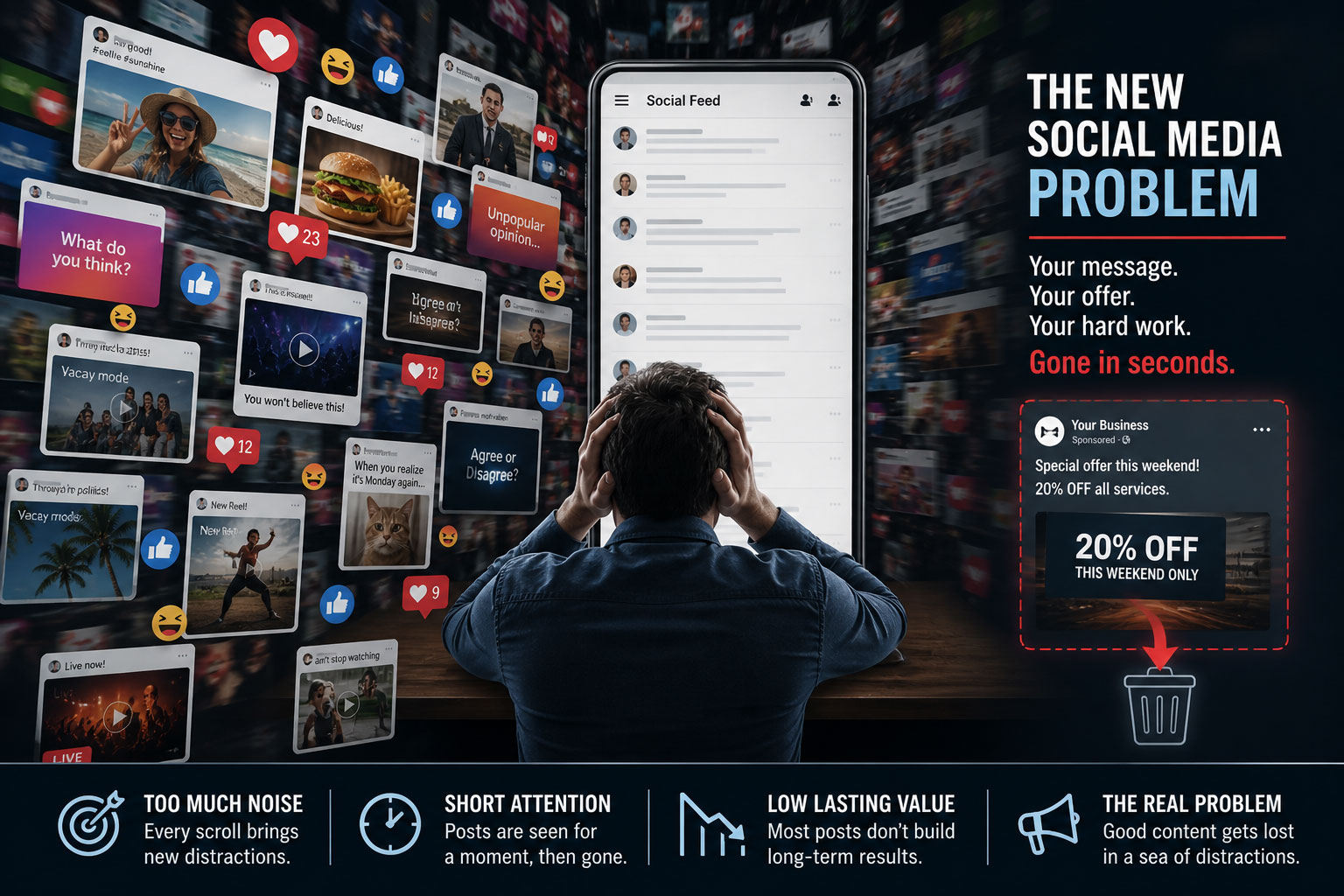
A crowded social media feed showing business offers getting lost among selfies, food posts, opinions, entertainment and distractions.

Social media is no longer just a place for connection. It has become a crowded public feed where businesses compete not only with other businesses, but also with selfies, food photos, opinions, entertainment, arguments and endless distractions.

That means a good offer can disappear quickly, even when the company has invested time, energy and money into creating it. The problem is not that social media has no value, but that most posts lose attention fast and rarely build long-term value on their own.

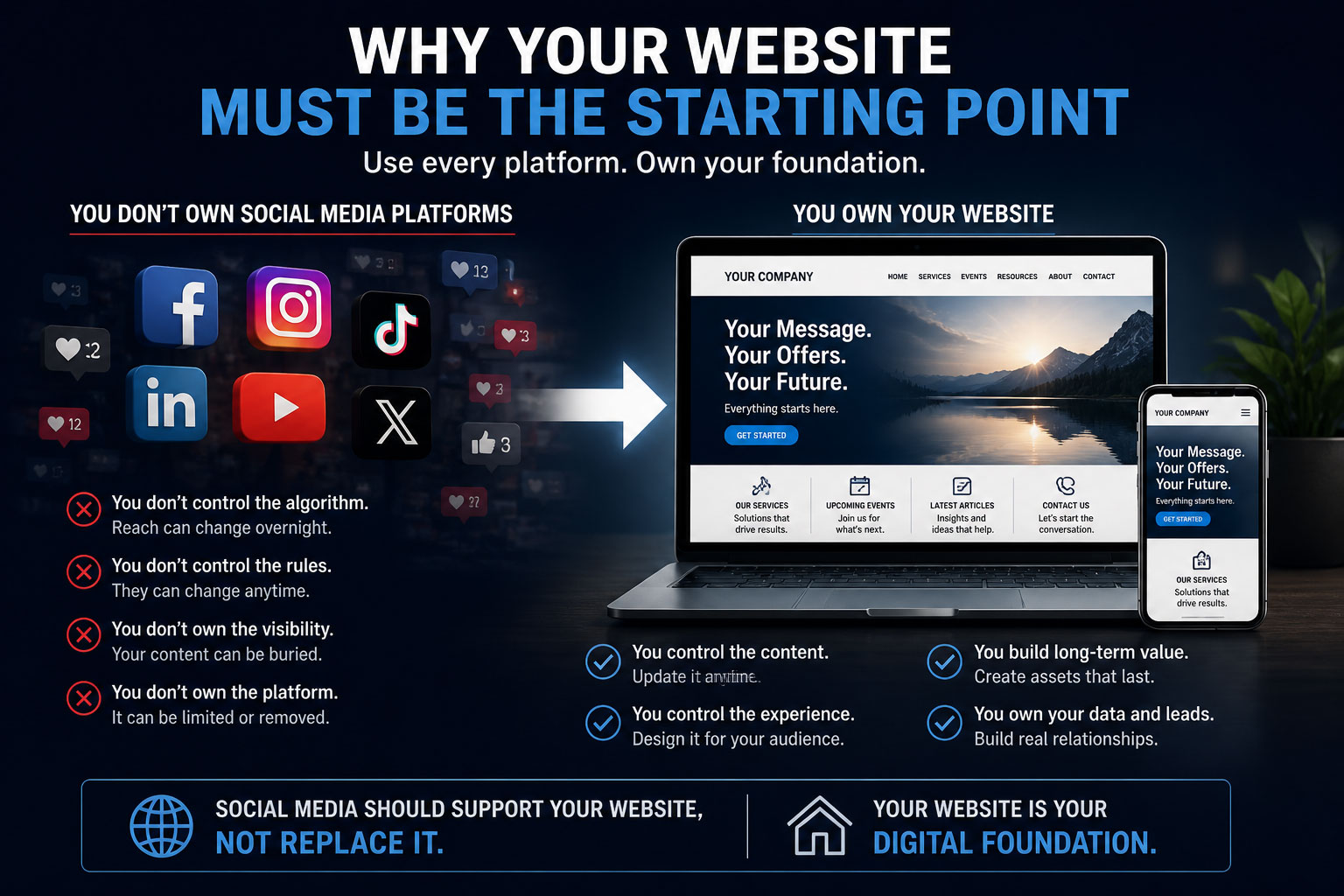
Social media platforms pointing toward a company website as the central digital foundation for content, offers, events and lead capture.

A company can use Facebook, Instagram, TikTok, LinkedIn, YouTube, X and many other platforms, but it does not own them. It does not control the algorithm, the rules, the reach or the long-term visibility of each post.

Your website is different. It is your own digital infrastructure, where your content, offers, events, promotions, articles, contact forms and lead capture systems should live. Social media should support your website, not replace it.

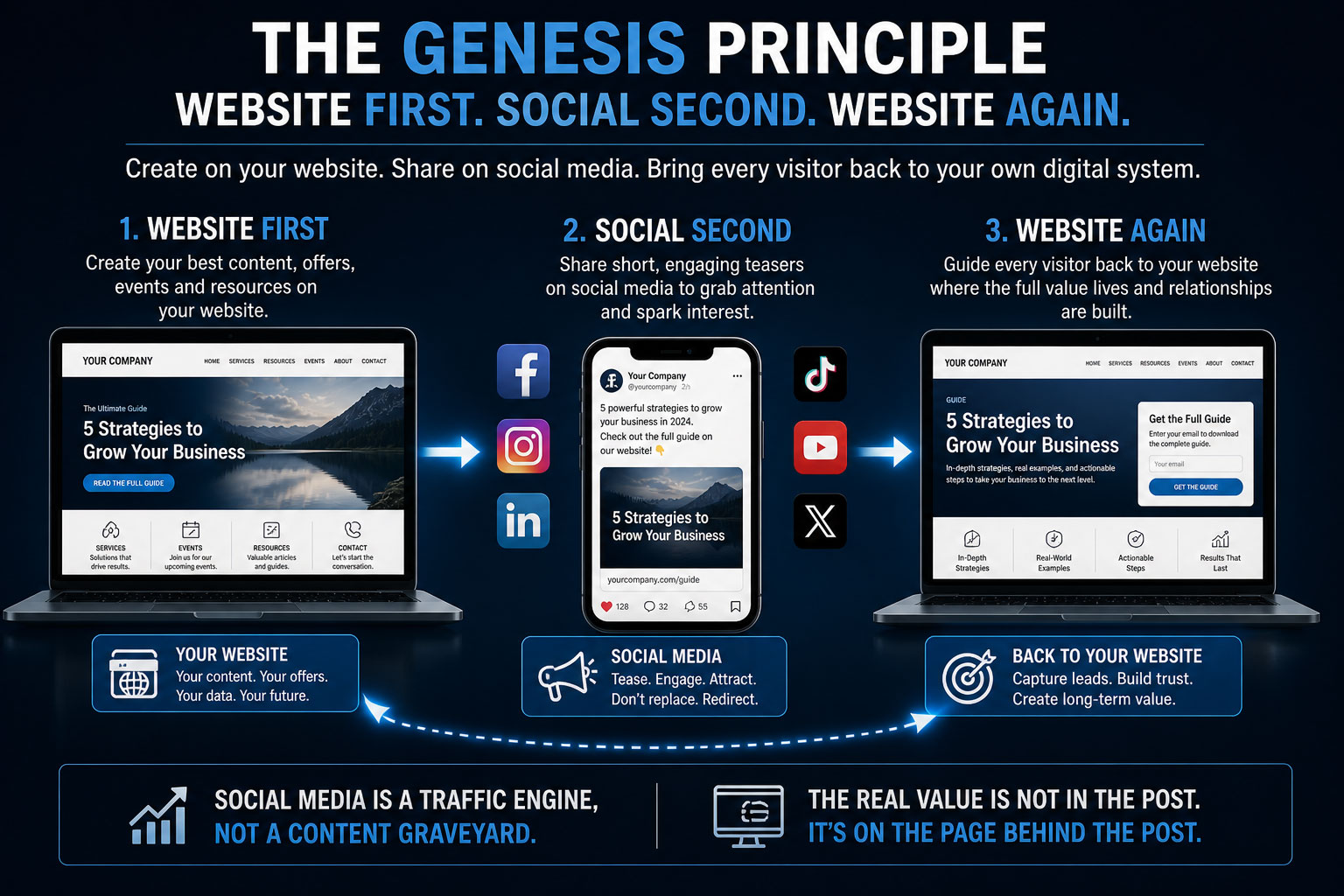
The Genesis Strategy follows one simple principle: Website first. Social second. Website again. First, create the main content on your website, then share teasers on social media, and guide every visitor back into your own digital system.

This turns social media into a traffic engine instead of a content graveyard. The real value is not only in the post itself, but in the website page behind the post.

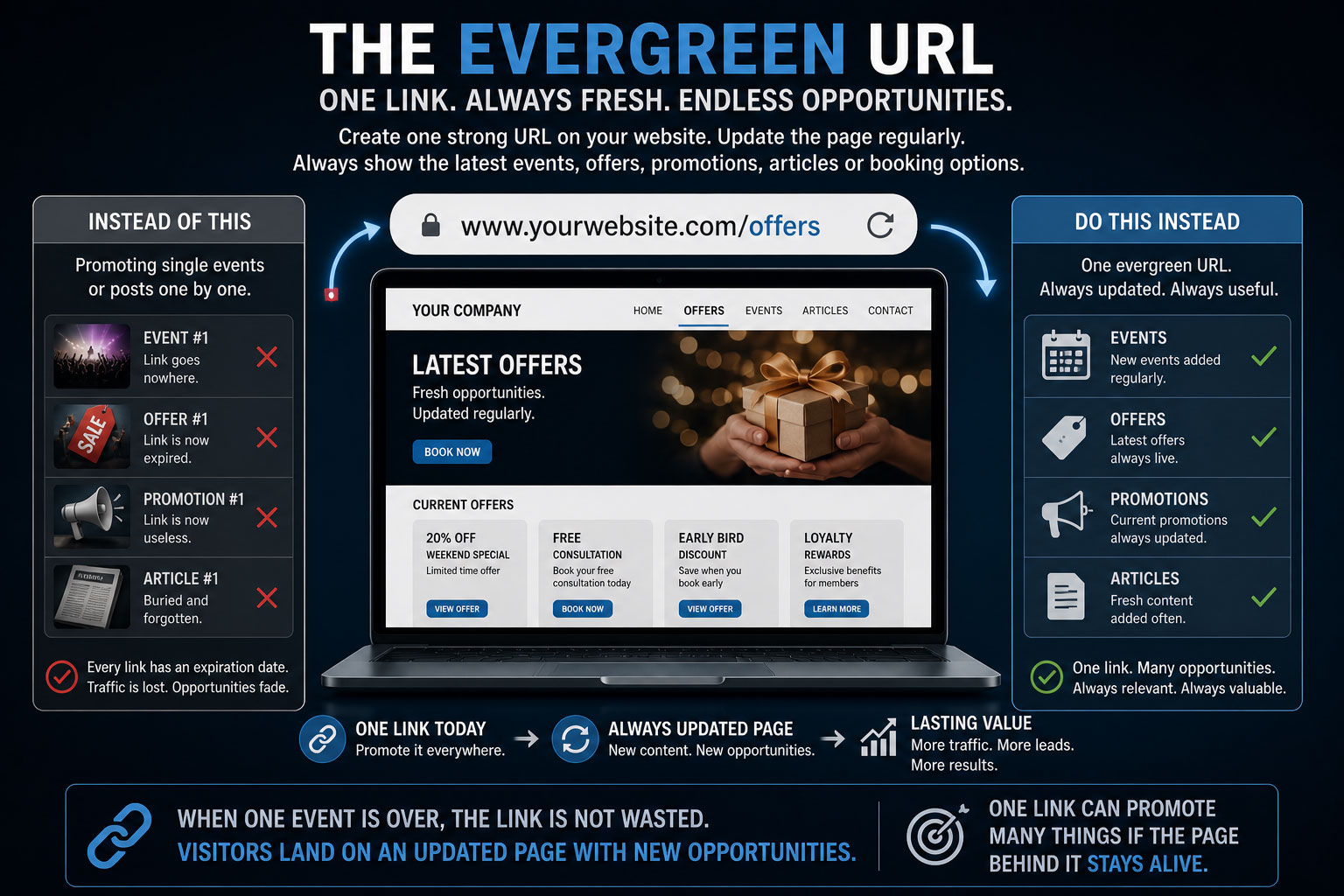
Instead of promoting only one single event, offer or post, a company creates one strong URL, for example www.website.com/offers, www.website.com/events or www.website.com/current. This page is updated regularly and always shows the latest events, offers, promotions, articles or booking options.

When one event is over, the link is not wasted. Visitors still land on an updated page with new opportunities, which means one link can promote many things if the page behind it stays alive.

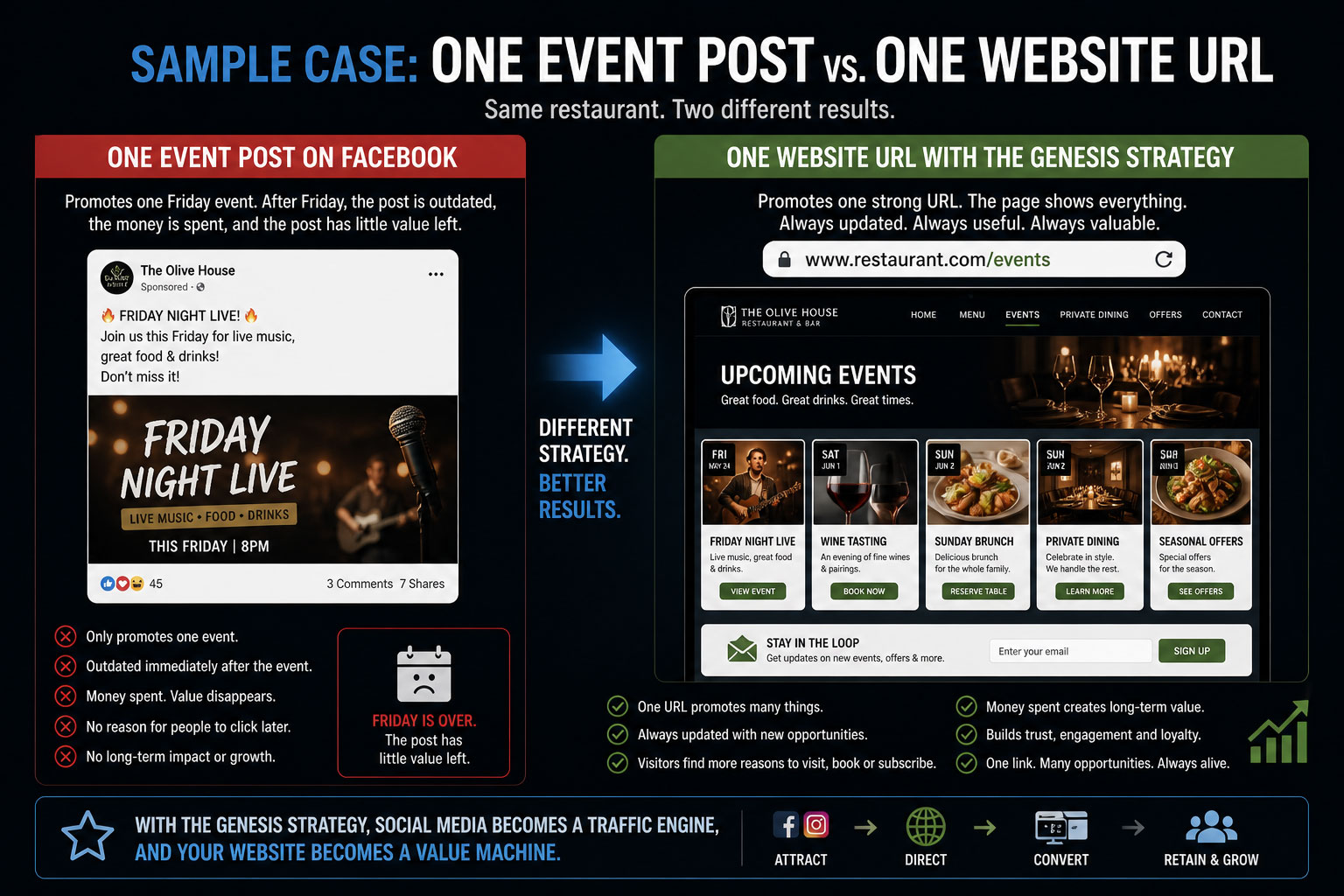
A restaurant promotes one Friday event directly on Facebook. After Friday, the post is outdated, the money is spent, and the post has little value left.

With the Genesis Strategy, the restaurant promotes www.restaurant.com/events instead. This page shows the Friday event, the next wine tasting, Sunday brunch, private booking options, seasonal offers and newsletter signup. Even if someone cannot attend the first event, they may still find another reason to visit, book or subscribe.

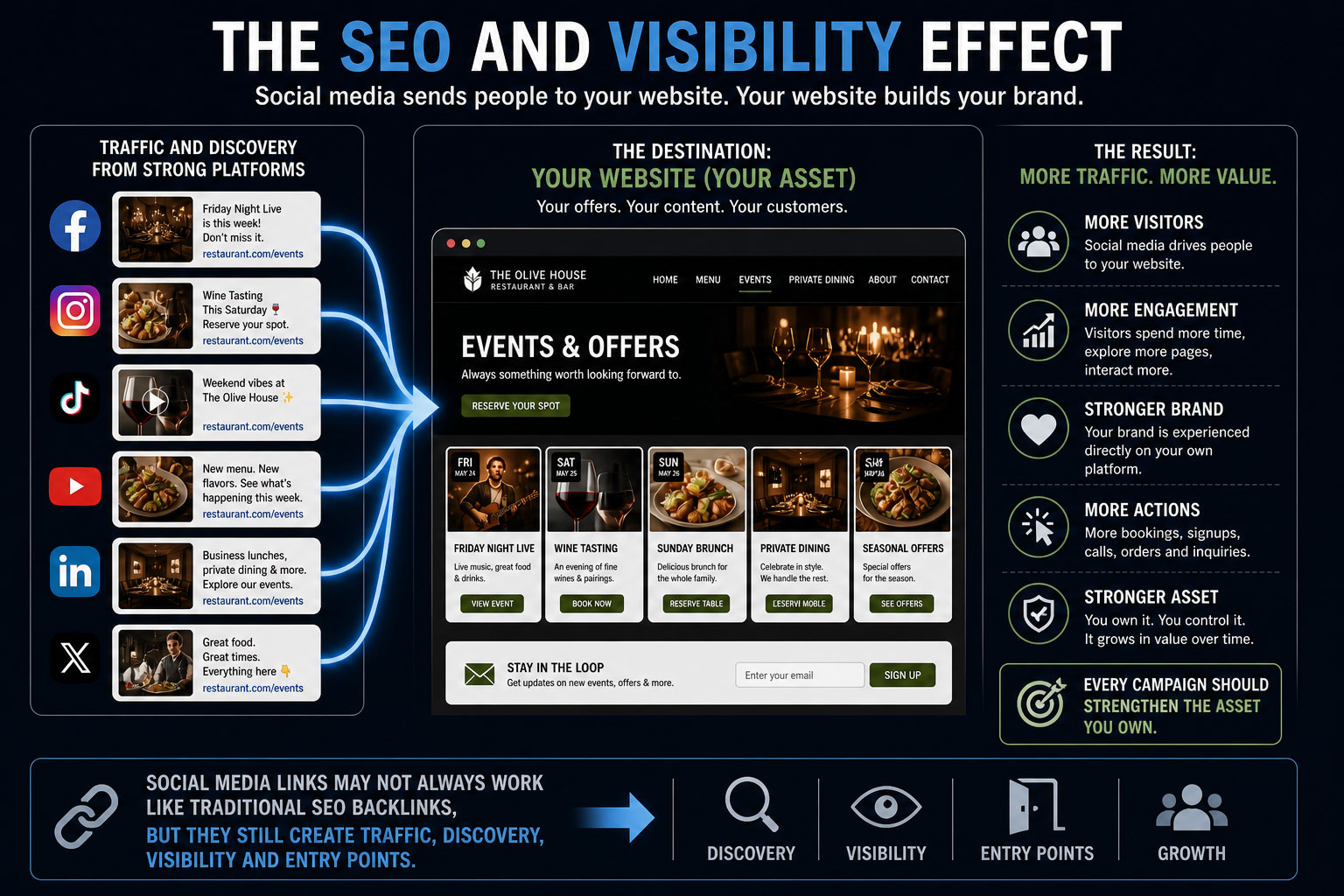
When social media sends people back to your website, your own platform receives more visitors, more engagement and more brand interaction. Your website becomes the central place where people discover your offers, read your content and take action.

Social media links may not always work like traditional SEO backlinks, but they still create traffic, discovery, visibility and entry points from strong platforms. Every campaign should strengthen the asset you own.

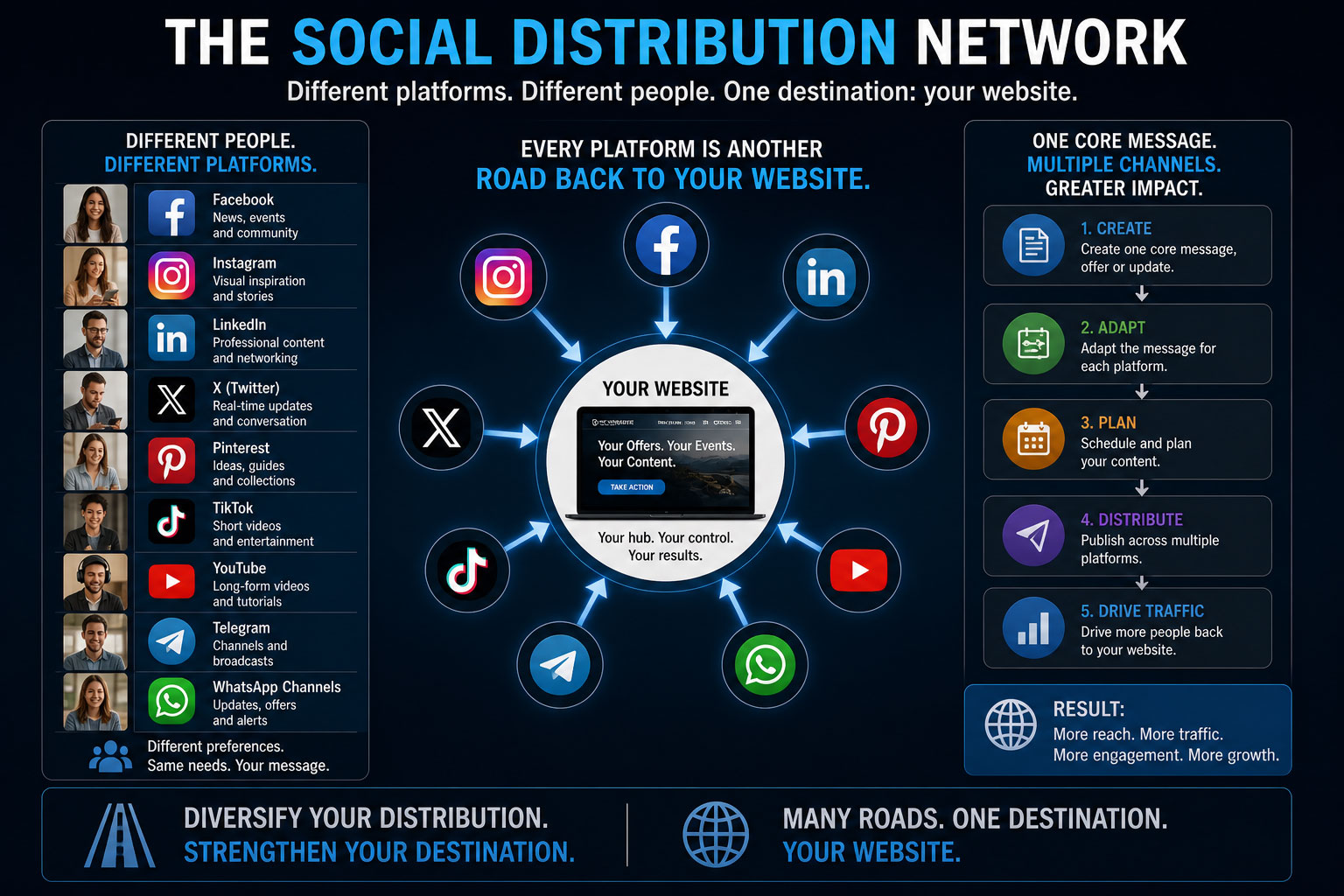
Different people prefer different platforms. Some follow on Facebook, others on Instagram, LinkedIn, X, Pinterest, TikTok, YouTube, Telegram or WhatsApp Channels, so a company should not depend on one platform only.

With the right software, one core message can be planned, adapted and distributed across multiple channels. Each platform becomes another road back to the website.

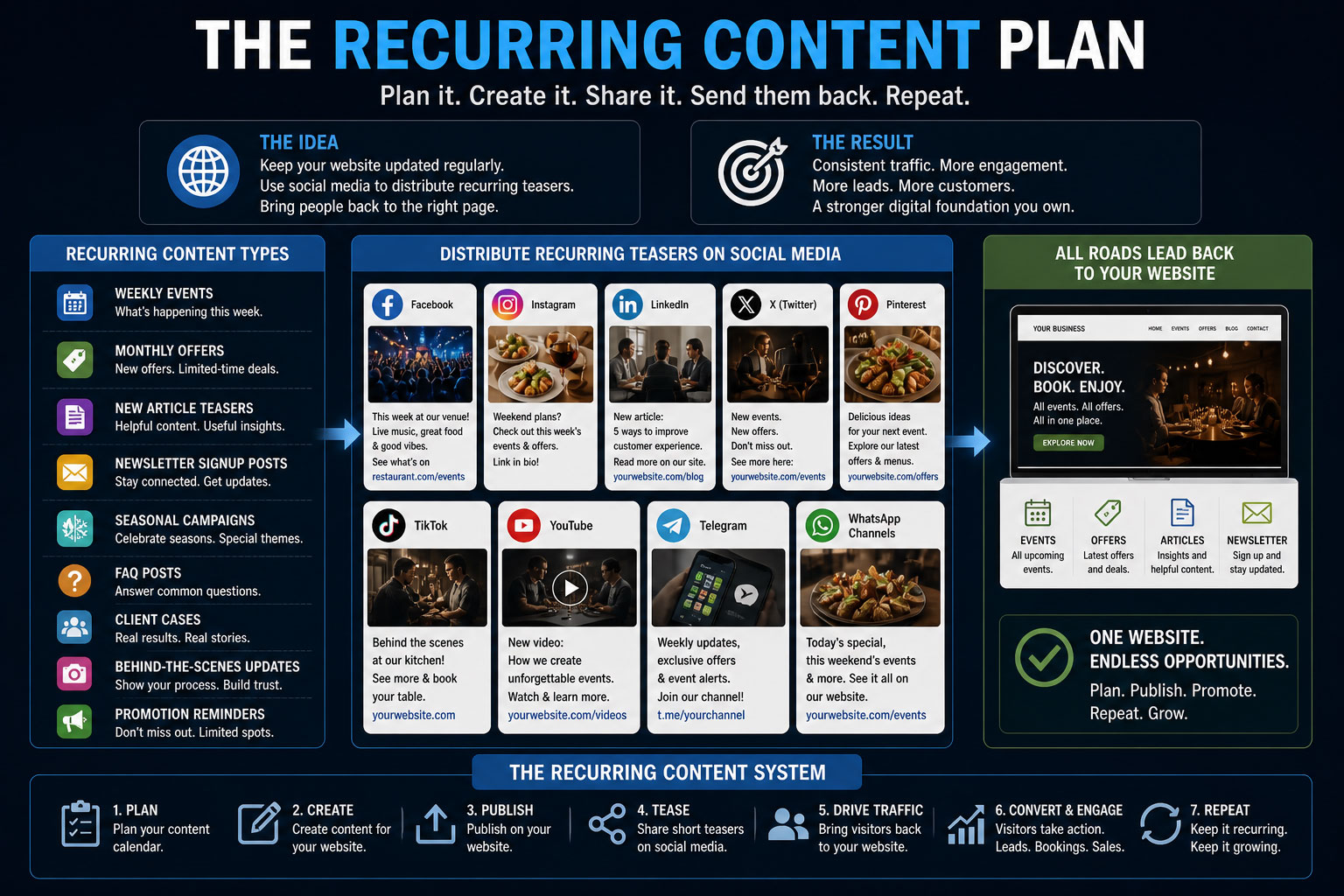
A recurring content plan showing website updates shared as social media teasers that lead visitors back to the right website page.

The website should be updated regularly, and social media should distribute recurring teasers. These can include weekly event posts, monthly offer updates, new article teasers, newsletter signup posts, seasonal campaigns, FAQ posts, client cases, behind-the-scenes updates or promotion reminders.

All of them lead back to the right website page. This turns social media from random posting into a planned traffic system.

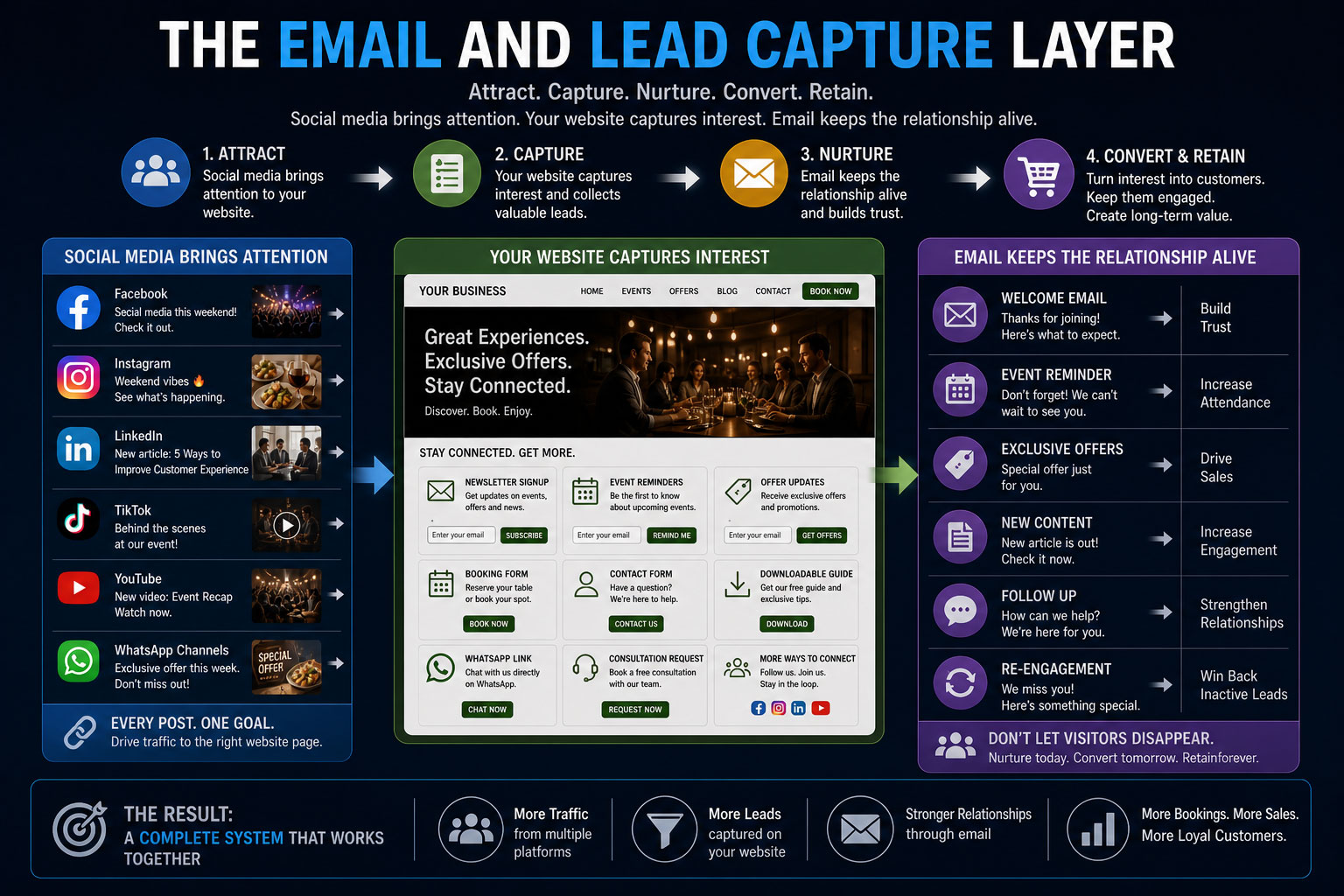
The Email and Lead Capture Layer

The website should not only inform visitors. It should capture interest through newsletter signups, event reminders, offer updates, booking forms, contact forms, downloadable guides, WhatsApp links or consultation requests.

Social media brings attention, the website captures interest, and email keeps the relationship alive. That way, visitors do not disappear after one click.

Build on What You Own

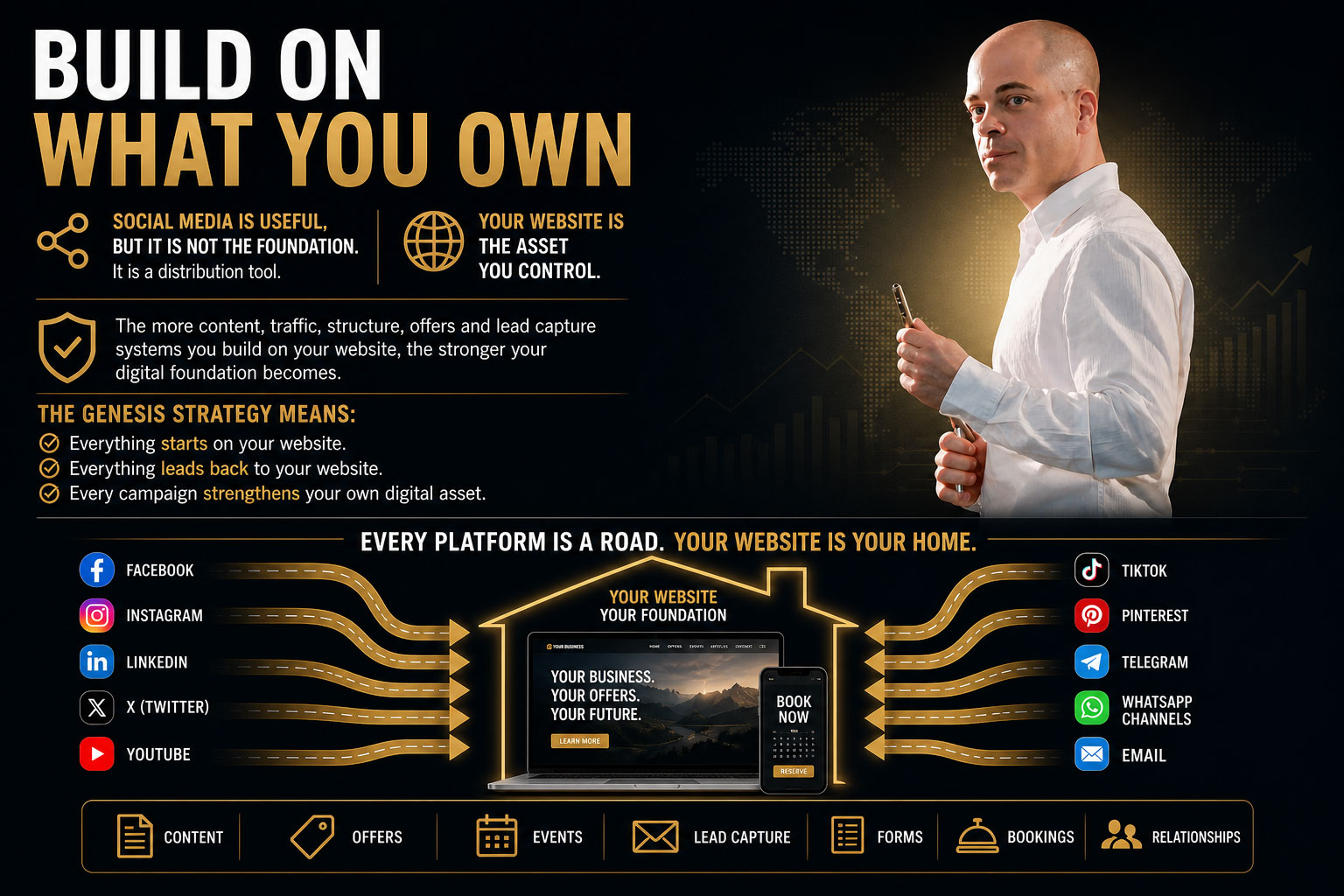
Social media is useful, but it is not the foundation. It is a distribution tool, while your website is the asset you control.

The more content, traffic, structure, offers and lead capture systems you build on your website, the stronger your digital foundation becomes. The Genesis Strategy means that everything starts on your website, everything leads back to your website, and every campaign strengthens your own digital asset.

A digital marketing strategy graphic showing social media platforms leading traffic back to a company website as the central owned asset.

“The goal is not to be everywhere. If your business depends only on social media, you are building on someone else’s land. The real goal is to use every platform as a road back to your own foundation, your website.”

The Genesis Strategy was developed by Daniel Deeb Badr after seeing how dependent companies had become on social media platforms over the past decade. For many businesses, digital marketing had slowly turned into something handled on the side, often by someone in the office, the accountant, an assistant, or whoever had access to the social media accounts.

For a while, that seemed to work. A quick Facebook post, a few Instagram updates, a boosted offer, and the business felt visible. But after COVID-19, the digital space changed. Feeds became more crowded, reach became less predictable, competition became stronger, and companies realised that their marketing system was built on platforms they did not own.

That is why the Genesis Strategy was created: to bring companies back to their own digital foundation. The strategy helps businesses stop depending on scattered social media activity and start building a system where every campaign begins on the website, is distributed through social media, and leads people back to the digital asset the company actually controls.

EVERY PLATFORM IS A ROAD. YOUR WEBSITE IS YOUR HOME